
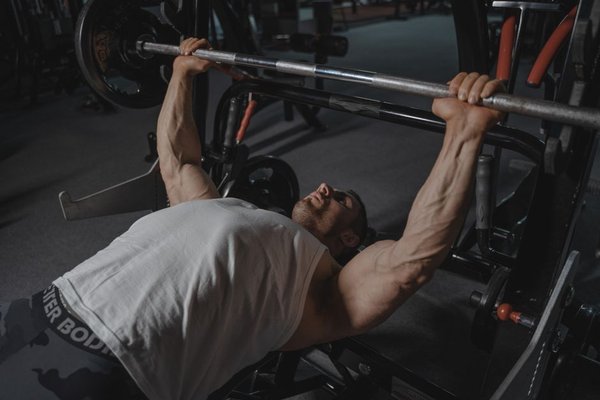
Shoulder discomfort during the bench press is often blamed on the exercise itself, but the problem is frequently how the lift is performed. A grip that is too wide, loose shoulder blades, flared elbows, or an inconsistent touch point can turn a productive chest exercise into an irritating one. This bench press form guide explains how grip, arch, elbow position, and bar path work together so you can press with more control without treating pain as a normal part of training.
Build a Stable Setup Before You Unrack
Lie down so your eyes are under the bar. Plant your feet, create tension through your legs, and secure your upper back against the bench. Your head, upper back, and glutes should remain supported throughout the repetition.
Pull your shoulder blades back and slightly down, as though placing them into your back pockets. This creates a stable base and helps stop the shoulders from rolling forward at the bottom. Biomechanical research suggests that scapular retraction can reduce certain shoulder forces during the bench press, although no technique can guarantee injury prevention.
Unrack the bar without losing that position. On heavy sets, a spotter-assisted handoff can help you keep your upper back tight instead of reaching forward.
Choose a Bench Press Grip Width That Fits
There is no universal bench press grip width. Arm length, shoulder structure, experience, and training goals all matter. A useful starting point is a grip that keeps your forearms close to vertical when the bar touches your chest. From the front, your wrists should be stacked over your elbows.
An extremely wide grip shortens the range of motion, but it can increase shoulder demands. Research has found that narrower grips may reduce some shoulder loads, while medium or wide grips can sometimes support heavier maximal lifts. For most lifters, the best choice is the widest grip that remains comfortable, controlled, and well aligned.
Hold the bar low in your palm rather than letting it roll toward your fingers. Keep the wrist close to neutral and wrap your thumbs around the bar. A secure full grip offers better control if the bar shifts unexpectedly.
Use a Controlled Bench Press Arch
A bench press arch is not automatically bad form. A moderate arch helps maintain upper-back tension, raises the chest to a consistent touch point, and keeps the shoulders from drifting forward. The arch should be controlled, with your glutes staying in contact with the bench.
You do not need an exaggerated competition-style position. For general strength or muscle building, lift the chest, retract the shoulder blades, and preserve a natural space beneath the lower back. Your feet should add stability without pushing your hips off the pad.
If the arch causes lower-back discomfort, reduce it and adjust your feet. The best setup lets you stay braced, keep your glutes down, and press without shifting around.
Find a Strong Bench Press Elbow Position
Your bench press elbow position should match your grip and touch point. Flaring the elbows directly out to the sides can put the upper arms close to a 90-degree angle from the torso, which many lifters find uncomfortable. Tucking them too aggressively can force the wrists and elbows out of alignment.
A practical middle ground is to keep the elbows somewhat below the shoulder line during the descent. For many lifters, the upper arms sit roughly 45 to 70 degrees from the torso, but anatomy changes the ideal angle. At the bottom, your elbows should be under the bar and your forearms nearly vertical.
As you press, allow the elbows to open naturally. Do not force them to remain tucked throughout the repetition. The aim is a coordinated movement in which the wrists, elbows, and shoulders share the load efficiently.
Follow an Efficient Bar Path
A strong bench press bar path is usually not perfectly vertical. Begin with the bar held over the shoulder area. Lower it under control toward the mid-to-lower chest or lower sternum, then press upward and slightly back so it finishes over the shoulders again.
This subtle diagonal route helps keep the bar balanced over the joints. Touching too high often encourages elbow flare, while touching too low can make the press awkward. Your exact touch point depends on your grip and proportions, so recording a set from the side can reveal whether it stays consistent.
Think about bringing your chest to the bar rather than collapsing your shoulders toward it. Touch gently instead of bouncing the bar off your ribcage. Keep your upper back tight, drive through your feet, and repeat the same path.
Practise Repeatable Repetitions
Take a breath and brace before lowering the bar. Keep your feet planted, squeeze the bar firmly, and use a controlled descent. As fatigue builds, end the set when your touch point, elbow position, or bar path changes noticeably.
Newer lifters do not need to take every set to complete failure. Leaving one to three good repetitions in reserve often provides useful training while allowing more practice with clean form. Use safety arms or a capable spotter whenever a missed rep could trap you under the bar.
What to Do if Your Shoulder Hurts
Do not assume shoulder pain is something you must push through. Reduce the load and review your grip, shoulder-blade position, elbow angle, and touch point. A slightly narrower grip and a more stable upper-back setup may feel better, but test changes with light weight.
Sharp pain, worsening symptoms, weakness, night pain, or discomfort that persists despite rest should be assessed by a qualified healthcare professional. A form guide can improve execution, but it cannot diagnose an injury. Pain-free alternatives such as push-ups, floor presses, dumbbell presses, or neutral-grip machines may help you continue training while seeking advice.
Frequently Asked Questions
How wide should my bench press grip be?
Start with a grip that keeps your forearms close to vertical at the bottom and does not irritate your shoulders. Adjust one finger-width at a time until the bar feels stable and your wrists remain over your elbows.
Should I arch my back when bench pressing?
A moderate arch is useful for upper-back tension and a consistent chest position. Keep your glutes on the bench, avoid lower-back strain, and use only as much arch as you can control comfortably.
Where should the bar touch my chest?
For many lifters, the bar touches around the mid-to-lower chest or lower sternum. The right point allows nearly vertical forearms and a smooth press upward and slightly back toward the shoulders.
Why do my shoulders hurt during bench press?
Possible contributors include an overly wide grip, excessive elbow flare, loose shoulder blades, poor load management, or an existing injury. Lower the weight, refine your setup, and seek professional assessment when pain is persistent, sharp, or worsening.
Build Strength on Consistent Form
Better bench pressing is not about copying one rigid style. It is about finding a repeatable setup that suits your body while following sound principles: stable shoulder blades, a secure grip, a controlled arch, aligned wrists and elbows, and a consistent bar path. Practise those details with manageable loads, review your technique regularly, and treat pain as a reason to adjust rather than simply push harder.